A beginner's guide to plant-based meal prep for the week
By the PlantedAndSimple Kitchen · October 11, 2026 · 10 min read
Ditch identical lunchboxes. Learn the component method to prep five days of balanced, high-protein plant-based meals in ninety minutes without spending Sunday night washing dishes.
Opening your refrigerator at seven on a Tuesday evening to find a wilting head of celery and half an onion is an easy way to end up ordering takeout. Most meal prep advice suggests spending four hours cooking five identical plastic containers of brown rice and steamed broccoli. By Wednesday noon, the broccoli is sulfurous, the rice is dry, and the thought of eating it feels like a chore.
A practical plant-based meal prep routine does not require eating the same meal five times in a row. It relies instead on the component method: preparing four versatile, nutrient-dense building blocks that assemble into distinct bowls, wraps, and warm plates in under ten minutes.
With ninety focused minutes on the weekend, you can roast your proteins, simmer a hearty pulse, whisk two distinct dressings, and chop crisp vegetables. Below is the systematic approach to stocking a high-protein plant-based fridge that keeps lunch fresh through Friday.
The component method versus identical boxed meals
The biggest failure point in meal prep is palate fatigue. When you assemble full dishes into five sealed tubs on Sunday, moisture migrates, textures soften, and the food homogenizes by midweek.
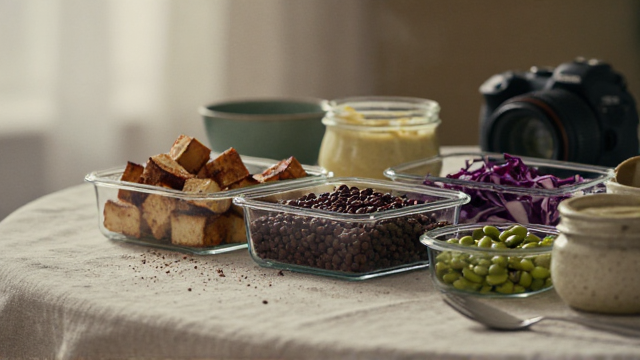
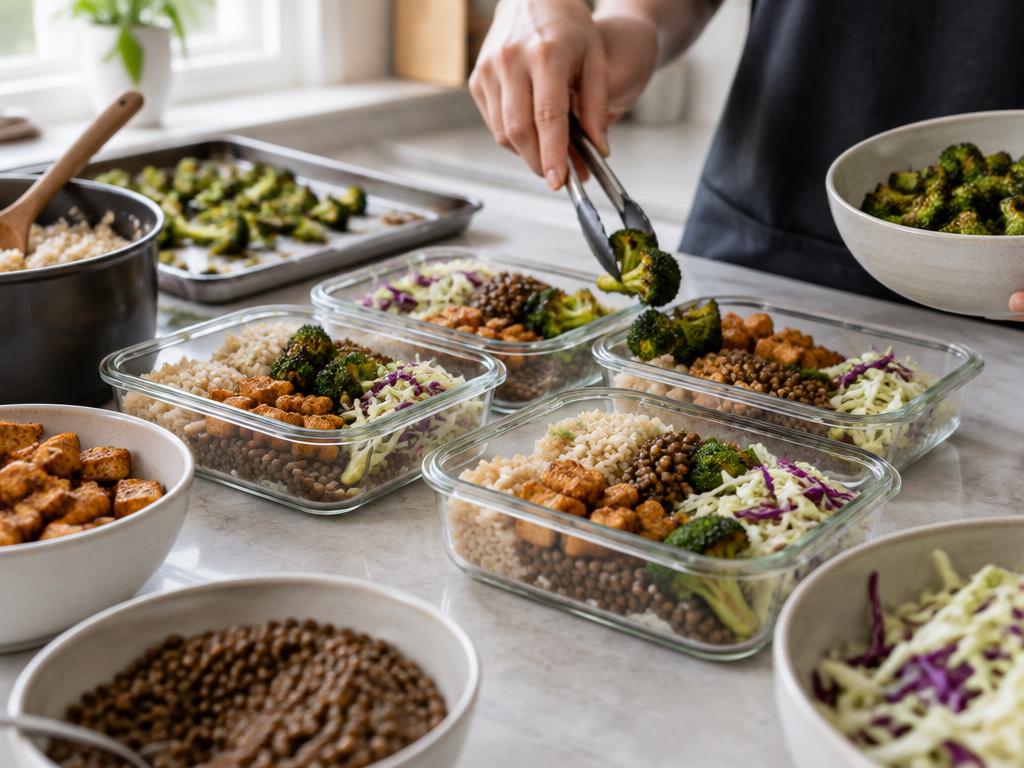
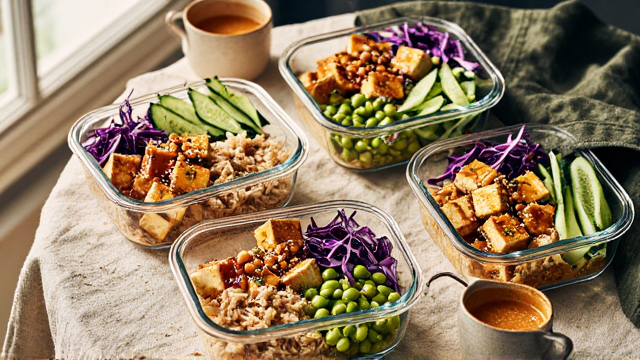
The component method treats your refrigerator like a private salad bar. You batch-cook individual elements and keep them separated in airtight glass containers:
One anchor protein: Baked marinated tofu, glazed tempeh, or seasoned seitan yielding at least 25 to 30 grams of protein per serving.
One complex carbohydrate or pulse: Puy lentils, farro, quinoa, or roasted sweet potatoes that hold their bite for five days.
Two textured vegetables: One roasted vegetable with caramelized edges and one raw, crunchy slaw or shredded brassica.
Two punchy sauces: A rich, fat-based emulsified sauce (such as tahini or cashew cream) and an acid-driven vinaigrette.
By keeping components distinct, your Tuesday lunch of cold sesame lentil salad becomes a warm roasted tofu and grain bowl with garlic tahini on Wednesday night.
Building the high-protein plant foundation
A common mistake when transitioning to plant-based meal prep is loading containers with low-density vegetables while skimping on concentrated protein. A bowl of roasted zucchini, bell peppers, and quinoa tastes pleasant at noon, but leaves you hungry by three o'clock.
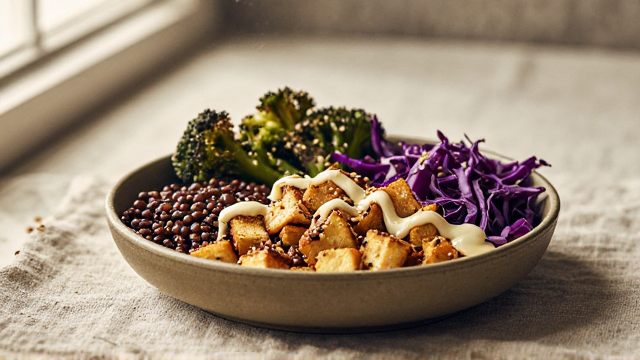
Keep each component separate so every lunch can change.
To build sustained fullness, anchor every meal with at least 30 grams of protein. Combine complementary sources rather than relying on a single ingredient:
Extra-firm tofu (pressed): Delivers roughly 17 grams of protein per 100-gram serving. Pressing out excess water before roasting creates a dense, chewy crumb that absorbs marinades.
Puy or brown lentils: Offer 18 grams of protein per cooked cup along with 15 grams of prebiotic fiber, maintaining structural integrity without turning to mush.
Shelled edamame: Adds 18 grams of complete protein per cup and requires only a four-minute blanch in salted water.
Hemp hearts and pumpkin seeds: A two-tablespoon sprinkle over any prepared plate adds an effortless 6 to 9 grams of protein plus essential fatty acids.
Tempeh is another reliable prep staple. Steaming sliced tempeh for eight minutes before baking strips away its natural bitterness and allows marinades to penetrate to the center.
A plant-based meal needs deliberate protein architecture: combine pressed soy, whole pulses, and raw seeds to hit thirty grams without powders.
The 90-minute parallel cooking timeline
Efficiency in the kitchen comes from sequencing tasks by passive versus active time. If you chop one vegetable, cook it, and then start the next, dinner prep takes three hours. Running your oven, stovetop, and cutting board simultaneously cuts that time in half.
Minutes 0 to 20: The setup and stovetop launch
Preheat your oven to 200°C (400°F). Slice two blocks of extra-firm tofu into bite-sized cubes, wrap them in clean kitchen towels, and set a heavy skillet on top to press. Meanwhile, rinse 300 grams of Puy lentils and bring them to a gentle simmer in salted water with a bay leaf.
Minutes 20 to 50: Roasting and marinating
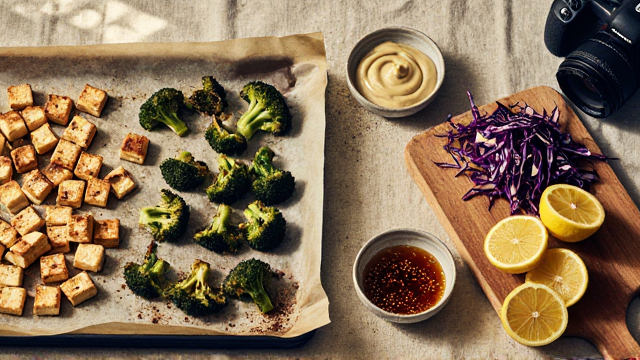
Toss the pressed tofu cubes with tamari, toasted sesame oil, garlic powder, and cornstarch. Spread them across a large parchment-lined baking sheet alongside florets of broccoli or cauliflower tossed with olive oil. Slide both sheets into the oven for 30 minutes, flipping the tofu halfway through for crisp edges.
Minutes 50 to 75: Cold prep and sauces
While the oven runs, shred purple cabbage and thinly slice radishes. Whisk a lemon-tahini garlic sauce in one small bowl and a ginger-shallot vinaigrette in another. By now, the lentils are tender; drain them thoroughly and spread them on a clean tray to cool rapidly, which stops residual cooking.
Minutes 75 to 90: Cool and pack
Allow hot foods to reach room temperature before snapping container lids shut. Storing steaming ingredients traps condensation, leading to soggy tofu and waterlogged lentils.
Cool roasted components on flat trays to retain their texture before packing.
Sauces that prevent flavor fatigue
A grain bowl is only as good as the dressing that binds it. Plain steamed vegetables and lentils dry out after forty-eight hours in the fridge; a rich, well-seasoned sauce brings them back to life.
Prepare two contrasting sauces each week to give the same base ingredients two entirely different identities:
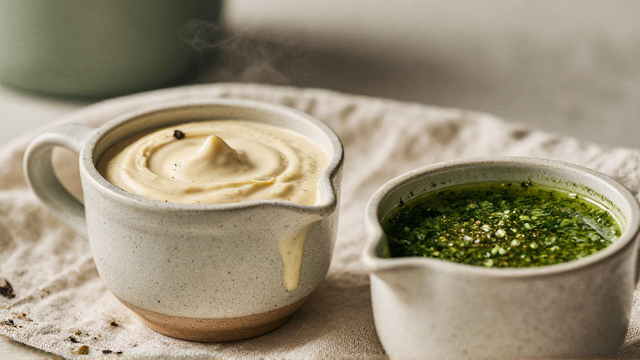
The creamy emulsion: Whisk raw tahini with warm water, minced garlic, fresh lemon juice, and sea salt. It starts out seizing up, but continuous whisking turns it into a pale, velvety cream that coats hearty greens and grains.
The bright herbaceous vinaigrette: Blend extra virgin olive oil, apple cider vinegar, Dijon mustard, capers, and a generous handful of flat-leaf parsley. The sharp acidity cuts through rich roasted tofu and starchy pulses.
Store your sauces in small glass jars. Tahini-based dressings thicken naturally in the refrigerator; simply stir in a splash of warm water before drizzling.
A creamy emulsion and a sharp herb vinaigrette create variety from one batch.
Storage mechanics: glass, towels, and shelf life
Food waste often stems from poor storage mechanics rather than poor cooking. Clear glass containers with snap-lock silicone seals preserve flavor far better than porous plastic, which absorbs odors and allows ambient air to oxidize ingredients.
Follow these rules to keep prepped ingredients safe and crisp through day five:
The paper towel buffer: Place a folded paper towel or clean cotton cloth inside containers of washed greens and sliced radishes to absorb excess moisture.
Temperature mapping: Store prepped pulses and cooked proteins on the coldest bottom shelf of the refrigerator, not inside door compartments where temperatures fluctuate.
Three-day versus five-day items: Roasted tofu, lentils, and hearty cabbage slaws keep well for five full days. Softer roasted vegetables like zucchini or blanched asparagus should be eaten within the first three days.
Pickled elements for longevity: Quick-pickle sliced red onions in equal parts apple cider vinegar and warm water. They keep for three weeks and add immediate brightness to rich meals.
How to turn one meal prep session into three midweek dinners
Once your containers are lined up in the refrigerator, assembling lunch or dinner takes five minutes. Here is how one batch of crisp sesame tofu, herbed Puy lentils, and shaved cabbage morphs over three days:
Option 1: The warm power bowl
Warm one cup of lentils in a dry skillet with a splash of water. Layer into a wide bowl with cold shredded cabbage, warm roasted tofu, and steamed edamame. Drizzle generously with lemon tahini sauce and finish with toasted sesame seeds and sliced spring onions.
Option 2: The crisp collard or flatbread wrap
Warm a flatbread or trim the thick stem from a raw collard leaf. Spread two tablespoons of tahini dressing across the base, then layer crisp tofu cubes, raw radishes, and lentils. Roll tightly for a portable, mess-free work lunch.
Option 3: The 10-minute skillet toss
Heat a teaspoon of olive oil in a pan over medium-high heat. Toss in the cold roasted tofu, lentils, and a few handfuls of fresh baby spinach until wilted. Remove from the heat, spoon over the bright herb vinaigrette, and top with roasted pumpkin seeds for crunch.
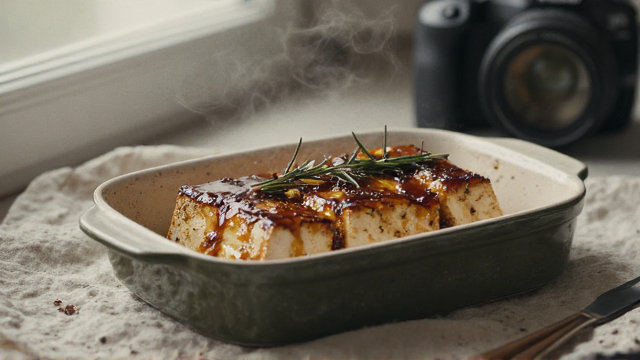
Sheet-Pan Sesame Tofu and Herbed Puy Lentil Prep Bowls
The finished dish
Prep25 minsCook35 minsServes4 servings
Ingredients
560g (2 blocks) extra-firm tofu, drained and pressed
2 tbsp tamari or low-sodium soy sauce
1 tbsp toasted sesame oil
1 tbsp cornstarch
1 tsp garlic powder
250g dry Puy lentils, rinsed
1 dried bay leaf
1 head broccoli (approx. 350g), cut into bite-sized florets
1 tbsp extra virgin olive oil
150g shelled edamame (fresh or thawed frozen)
1/4 small head red cabbage (approx. 200g), finely shredded
80g hulled tahini
3 tbsp fresh lemon juice
1 small garlic clove, finely grated
4-5 tbsp warm water
1/2 tsp fine sea salt
2 tbsp toasted sesame seeds, for serving
Method
Preheat the oven to 200°C (400°F) and line two large rimmed baking sheets with parchment paper.
Cut the pressed tofu into 2cm cubes. In a wide bowl, toss the tofu gently with tamari, sesame oil, garlic powder, and cornstarch until evenly coated.
Spread the seasoned tofu onto the first baking sheet in a single layer with space between pieces. Toss the broccoli florets with olive oil and a pinch of salt on the second baking sheet.
Transfer both sheets to the oven. Roast the broccoli for 20 to 25 minutes until tender with charred edges. Roast the tofu for 30 to 35 minutes, turning once halfway through, until golden and crisp.
While the oven runs, place the rinsed lentils and bay leaf in a medium pot. Cover with 750ml water and bring to a simmer over medium heat. Cook uncovered for 20 to 25 minutes until tender but firm. Drain well, discard the bay leaf, and season with 1/4 teaspoon salt.
Prepare the dressing: Whisk tahini, lemon juice, grated garlic, and 1/4 teaspoon salt in a bowl. Whisk in warm water one tablespoon at a time until the sauce turns smooth, pale, and pourable.
Let all warm components cool to room temperature. Pack tofu, lentils, roasted broccoli, shredded cabbage, and edamame into separate glass containers. Store the tahini dressing in a jar. Keep refrigerated for up to 5 days.
Nutrition (per serving)
Calories520 kcal
Protein34g
Carbohydrates48g
Fiber16g
Fat22g
Cook's notes
Press the tofu between clean tea towels weighted with a cast-iron skillet for at least 15 minutes before cubing to ensure a firm, crisp result.
If the tahini dressing thickens after chilling in the fridge, whisk in one tablespoon of warm water just before serving.
For extra variety, swap the tahini dressing on day three for a sharp lime-vinaigrette or spicy peanut sauce.
Plant-Based Meal Prep FAQs
How long does plant-based meal prep safely last in the fridge?
Cooked pulses, pressed tofu, and cruciferous vegetables like cabbage and broccoli stay fresh for four to five days when stored in airtight glass containers at 4°C (40°F) or below. Delicate greens, sliced cucumbers, and cut avocados should be prepped fresh or eaten within two days.
How do you keep roasted tofu crispy after storing it?
Tofu absorbs moisture in the refrigerator, softening its exterior over time. To restore its crisp texture, reheat cubes in a dry skillet over medium-high heat for three minutes or warm them in an air fryer at 190°C (375°F) for four minutes. Avoid microwaving if you want to keep the outer crust intact.
Can you freeze prepped plant-based meals?
Cooked lentils, beans, and grain bases freeze well for up to three months in sealed freezer containers. Tofu changes texture after freezing, becoming spongier and chewier, which some cooks enjoy. Avoid freezing raw slaws, watery vegetables, or emulsion-based dressings like tahini, as they separate upon thawing.
How do I hit 30 grams of protein per meal without using protein powder?
Combine concentrated whole-food plant proteins in each bowl. Pairing 140 grams of extra-firm tofu (24g protein) with half a cup of cooked edamame (9g protein) and two tablespoons of hemp hearts (6g protein) yields nearly 40 grams of complete protein in one meal.
What are the best containers for weekly meal prep?
Airtight borosilicate glass containers with silicone-gasket locking lids are the gold standard. Glass does not retain stains or odors, goes directly from fridge to oven or microwave, and keeps cut vegetables noticeably crisper than thin plastic containers.
Final thoughts on plant-based meal prep
Building a sustainable weekday cooking habit is not about transforming into someone who loves spending all Sunday scrubbing pans. It is about understanding that a small collection of well-cooked components provides more freedom, better nutrition, and fresher food than any rigid set of identical lunchboxes.
When you keep pressed proteins, toothsome pulses, and bright dressings ready in your refrigerator, healthy weekday eating ceases to be a daily negotiation. Start your plant-based meal prep with one sheet pan, one pot of lentils, and ninety minutes this weekend.