How to get enough protein on a plant-based diet without supplements
By the PlantedAndSimple Kitchen · November 11, 2026 · 9 min read
A realistic, kitchen-tested guide to hitting daily plant-based protein targets using whole foods like tempeh, lentils, and seeds. Includes a 34-gram dinner recipe.
A standard adult leading an active lifestyle requires roughly 1.2 to 1.6 grams of plant-based protein per kilogram of body weight each day. For a 70-kilogram person, that equates to 84 to 112 grams daily. Getting enough protein on a plant-based diet is simple with intentional high-protein vegan meal prep, yet the primary friction point for home cooks transitioning to plant-based eating is not a lack of options, but a reliance on raw vegetable volume rather than concentrated protein density.
Replacing poultry or fish with roasted broccoli and sweet potatoes fills a bowl quickly, but it yields barely 12 grams of protein despite filling you up completely. The secret to consistent satisfaction is shifting your mindset from single-ingredient replacements to deliberate protein compounding.
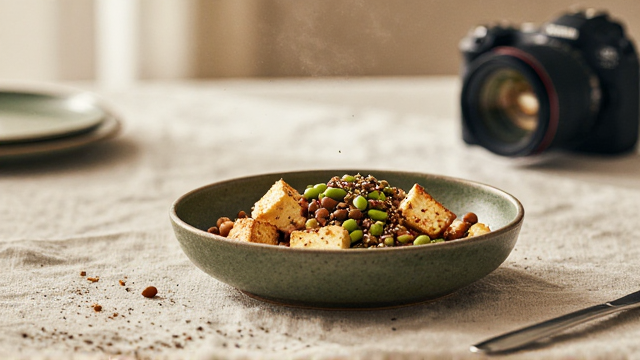
By treating plant proteins as structural building blocks—anchoring each plate with legumes or soy, then finishing with seeds and whole grains—reaching 30 grams per meal becomes straightforward and deeply delicious. The full, kitchen-tested recipe card for our 34-gram dinner bowl is detailed below.
How to get enough protein: the plant-based density spectrum
Not all plant foods carry the same nutritional weight per mouthful. Knowing which ingredients deliver concentrated amino acids allows you to build plates that satisfy and ensure you get enough protein without requiring unmanageable portions.
At the top of the high-protein vegan density hierarchy are fermented and curdled soy products alongside vital wheat gluten:
Seitan: 25 grams of protein per 100-gram serving. It provides a dense, chewy texture ideal for braising and searing.
Tempeh: 19 to 21 grams per 100 grams. Whole fermented soybeans offer both firm bite and gut-supportive fiber.
Extra-Firm Tofu: 14 to 17 grams per 100 grams. A blank culinary slate capable of absorbing marinades and crisping at high heat.
Edamame: 12 grams per 100 grams. Fresh, tender, and quick to reheat directly from frozen.
Legumes form the secondary foundational tier. Cooked Puy lentils, black beans, and chickpeas provide 8 to 9 grams per 100 grams, while delivering complex carbohydrates that keep energy stable across the afternoon.
The compounding method: how to construct a high-protein vegan plate
Relying on one ingredient to carry the entire protein quota of a plant-based dinner often leads to palate fatigue. The compounding method combines a primary anchor with secondary pantry supplements to reach 30 to 35 grams across the components of a single dish, showing you how simple it is to get enough protein at dinner. For more inspiration, check out our high-protein Buddha bowl recipe.
Step 1: Choose an anchor (18 to 22 grams)
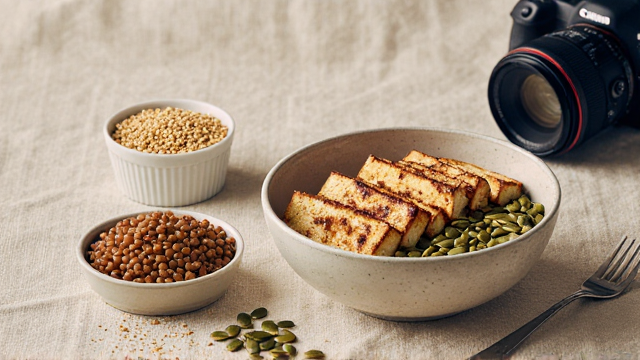
Start your plate with 150 grams of seared extra-firm tofu, 120 grams of sliced tempeh, or a 200-gram base of stewed French green lentils. This establishes the structural core of the dish.
Step 2: Add a supportive grain or legume (6 to 8 grams)
Pair your anchor with half a cup of cooked quinoa, farro, wild rice, or tossed edamame. Quinoa provides roughly 4 grams per cooked half cup, alongside farro's hearty, nutty chew.
Step 3: Finish with high-density seeds (5 to 7 grams)
Two tablespoons of shelled hemp hearts contribute 6.5 grams of protein without altering the flavor profile. Toasted pumpkin seeds, tahini dressings, and nutritional yeast sprinkles reliably push your plate over the 30-gram threshold.
Layering primary anchors with seeds reliably delivers over 30 grams of protein.
Plant-based protein works best through compounding: anchor the plate with a primary source, reinforce it with whole grains, and seal it with nutrient-dense seeds.
Kitchen mechanics: extracting texture and flavor from soy
A common critique of plant proteins is texture, yet poor texture is almost always a preparation error. Extra-firm tofu is packed in water; if you sear it wet, it steams rather than crisps, resulting in a spongy interior.
The dry-press technique
Slice your block into uniform 2-centimeter slabs. Sandwich them between clean kitchen towels and weigh them down with a heavy cast-iron skillet for 20 minutes. This draws out free moisture so the exterior can caramelize in fat.
High-heat fat conduction
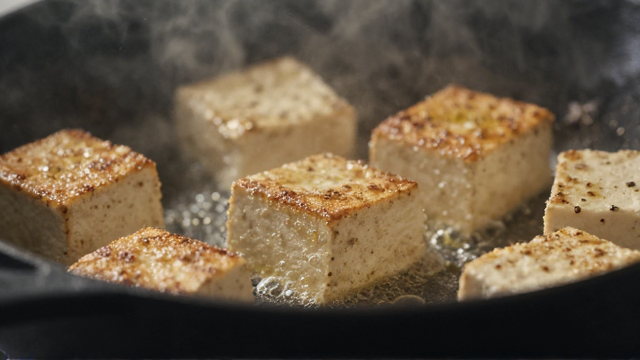
Use a well-seasoned carbon steel or cast-iron pan over medium-high heat. Add neutral oil with a high smoke point, such as avocado oil. Let the tofu sit undisturbed for 4 to 5 minutes until a deep golden crust forms before turning.
Tempeh benefits from a different approach: steam whole slabs for 8 minutes before slicing and pan-searing. Steaming removes the faint natural bitterness and opens the grain of the beans to drink in your glaze or sauce.
Proper moisture removal allows tofu to develop a crisp, savory crust in the pan.
Navigating the fiber trap and satiety cues
One honest trade-off in plant-based nutrition is the volume-to-protein ratio. Because whole-food plant proteins come packaged with dietary fiber, new plant-based cooks often experience premature fullness before they get enough protein.
Consuming 30 grams of protein entirely from black beans requires eating over two full cups of beans in one sitting. That delivers an immense 30 grams of fiber alongside the protein, which can cause digestive distress and excessive fullness.
To bypass the fiber trap, incorporate ingredients that fit a high-protein vegan pattern without excessive bulk:
Tofu and tempeh: Lower fiber density per gram of protein than whole beans due to processing and fermentation.
Hemp hearts: Dense in healthy fats and protein with modest insoluble fiber.
Soy curls and seitan: Very low fiber volume, allowing you to hit recovery numbers without uncomfortably distended digestion.
A practical weekly meal prep framework for effortless dinners
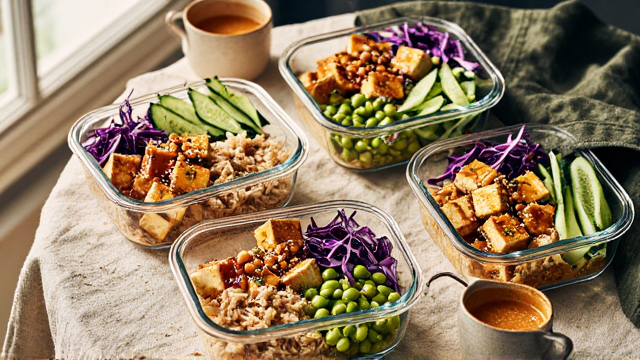
Weeknight cooking collapses when you have to cook grains, press soy, and simmer legumes from scratch after a long workday. Allocating 45 minutes on Sunday for simple meal prep sets up effortless assembly throughout the week, helping you get enough protein on busy weeknights without extra stress. Learn more about our approach on our about us page.
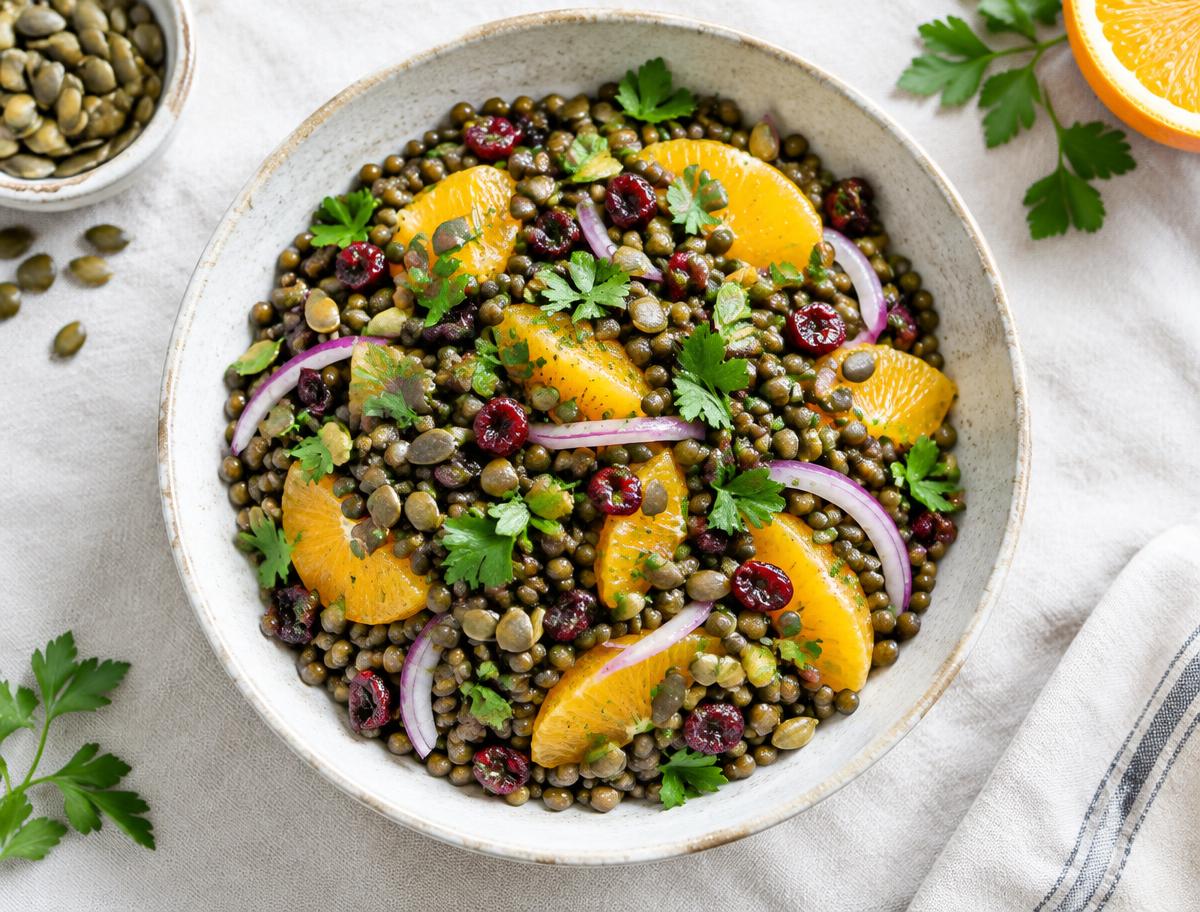
Cook a batch of French green lentils or black beluga lentils in vegetable stock with two bay leaves and a crushed garlic clove. Lentils hold their firm texture in an airtight glass container for up to five days without softening into mush.
Simultaneously, press and cube two blocks of extra-firm tofu, toss them lightly in tamari and cornstarch, and bake them on a parchment-lined sheet pan at 200°C (400°F) for 25 minutes. Store these crispy cubes in the refrigerator; this reliable meal prep component can be tossed cold into lunchtime salads or revived in a dry hot pan in two minutes for dinner.
Pan-Seared Golden Tofu with Warm Puy Lentils and Garlic-Herb Emulsion
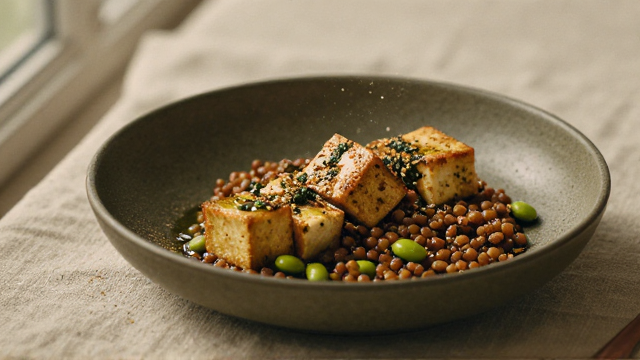
The finished dish
Prep20 minsCook25 minsServes2 servings
Ingredients
280 g extra-firm tofu, drained and pressed dry
15 ml avocado oil or light olive oil
15 ml tamari or low-sodium soy sauce
10 g cornstarch
200 g cooked Puy lentils (or canned, rinsed and drained)
80 g shelled edamame, thawed
2 cloves garlic, finely minced
30 ml extra virgin olive oil
15 ml fresh lemon juice
10 g fresh flat-leaf parsley, finely chopped
20 g shelled hemp seeds
0.5 tsp fine sea salt
0.25 tsp freshly ground black pepper
Method
Cut the pressed tofu into 2.5-centimeter cubes. In a wide mixing bowl, gently toss the cubes with tamari, then sprinkle with cornstarch until an even, light powdery coat forms.
Heat avocado oil in a heavy 26-centimeter skillet over medium-high heat. Once the oil shimmers, add the tofu cubes in a single layer with space between each piece.
Sear undisturbed for 4 minutes until deeply browned on the bottom. Turn each cube carefully and cook the remaining sides for another 4 to 5 minutes total until crisp and golden. Transfer to a warm plate.
Lower the skillet heat to medium. Add the cooked Puy lentils, shelled edamame, and minced garlic with two tablespoons of water to loosen the pan fond. Warm through for 3 minutes, stirring constantly.
Whisk together the extra virgin olive oil, fresh lemon juice, sea salt, black pepper, and chopped parsley in a small bowl to create an emulsion.
Divide the warm lentil and edamame mixture between two shallow wide bowls. Arrange the crisp tofu cubes on top, spoon the garlic-herb emulsion generously over everything, and finish with a tablespoon of hemp seeds over each portion.
Nutrition (per serving)
Calories485 kcal
Protein34 g
Carbohydrates31 g
Dietary Fiber11 g
Total Fat26 g
Cook's notes
Do not crowd the skillet when searing the tofu; steam trapped between closely packed cubes will prevent the cornstarch from forming a crisp shell.
If cooking lentils from scratch, simmer them with a strip of lemon peel and a sprig of fresh thyme to infuse deep flavor directly into the pulse.
Leftovers keep well for up to three days, making this an ideal meal prep lunch; store the crisp tofu separately from the dressed lentils to maintain maximum texture.
Protein on a Plant-Based Diet FAQs
Do I need to combine complementary proteins at every meal?
No, current nutritional science confirms that combining specific plant proteins at the exact same meal is unnecessary. Your body maintains an amino acid pool throughout the day, drawing on what it needs as long as you eat a varied diet featuring legumes, seeds, and grains across a 24-hour cycle.
Can you build muscle on a plant-based diet without protein powder?
Yes, muscle protein synthesis depends on total daily protein intake and resistance training, not the format of consumption. As long as you get enough protein from leucine-rich whole plant foods like tempeh, tofu, lentils, and edamame, you can hit optimal muscle-building thresholds entirely with solid food.
What is the highest protein plant-based food by volume?
Vital wheat gluten, prepared as seitan, is the most concentrated whole-food plant protein, offering roughly 25 grams of protein per 100 grams. Close behind are fermented tempeh at 20 grams per 100 grams and extra-firm pressed tofu at 16 to 17 grams.
How can I avoid digestive bloating when increasing plant protein?
Increase your legume intake gradually over several weeks to allow your gut microbiome time to adjust to higher prebiotic fiber levels. Additionally, thoroughly rinse canned beans, soak dry legumes with a pinch of baking soda before cooking, and lean on lower-fiber options like tofu and tempeh.
Is soy safe to consume every day for protein?
Extensive peer-reviewed clinical research demonstrates that moderate daily consumption of whole soy foods like tofu, tempeh, and edamame is safe and beneficial for metabolic and cardiovascular health. Soy isoflavones behave differently in human tissue than mammalian estrogen, offering protective antioxidant properties.
Final thoughts on getting enough protein on a plant-based diet
Getting enough protein on a plant-based diet requires neither lab-formulated protein isolates nor uncomfortably massive salads. By understanding the protein density hierarchy and applying the simple principle of compounding, every meal can become a balanced, deeply flavorful centerpiece.
Focus on mastering foundational kitchen habits: pressing your tofu, simmering hearty lentils in seasoned stock, and dedicating a little time to weekly meal prep. The results will show in your energy, your culinary satisfaction, and your dinner table.