By the PlantedAndSimple Kitchen · November 10, 2026 · 8 min read
Learn how to roast pumpkin seeds until extra crispy. An easy vegan snack with a simple float-and-dry method and 4 savory seasonings.
Most batches of roasted pumpkin seeds turn out either leathery or scorched. The seeds harvested from carving pumpkins possess a thick, fibrous outer white hull that protects an oil-rich interior germ. When that hull traps water beneath a hasty coat of oil, the seed steams on the baking tray instead of roasting, leaving you chewing through stubborn cellulose.
Achieving truly crispy roasted pumpkin seeds does not require boiling pots or complicated brining. It requires two straightforward physical steps: removing mucilage using density separation in cold water, and stripping away both surface water and internal kernel moisture at a steady 325°F (165°C).
With roughly three to four grams of plant protein per quarter cup, whole roasted pumpkin seeds make a crunchy, mineral-rich snack you can make in autumn. Below, you will find the step-by-step culinary technique and seasoning ratios, with the complete recipe card ready for immediate kitchen use.
The cold-water float method for cleaning seeds
Scraping the interior cavity of a pumpkin leaves behind a tangled clump of stringy orange pulp and slippery seeds. Attempting to pull seeds away strand by strand is slow and leaves sticky pectin on the hulls that burns quickly in the oven.
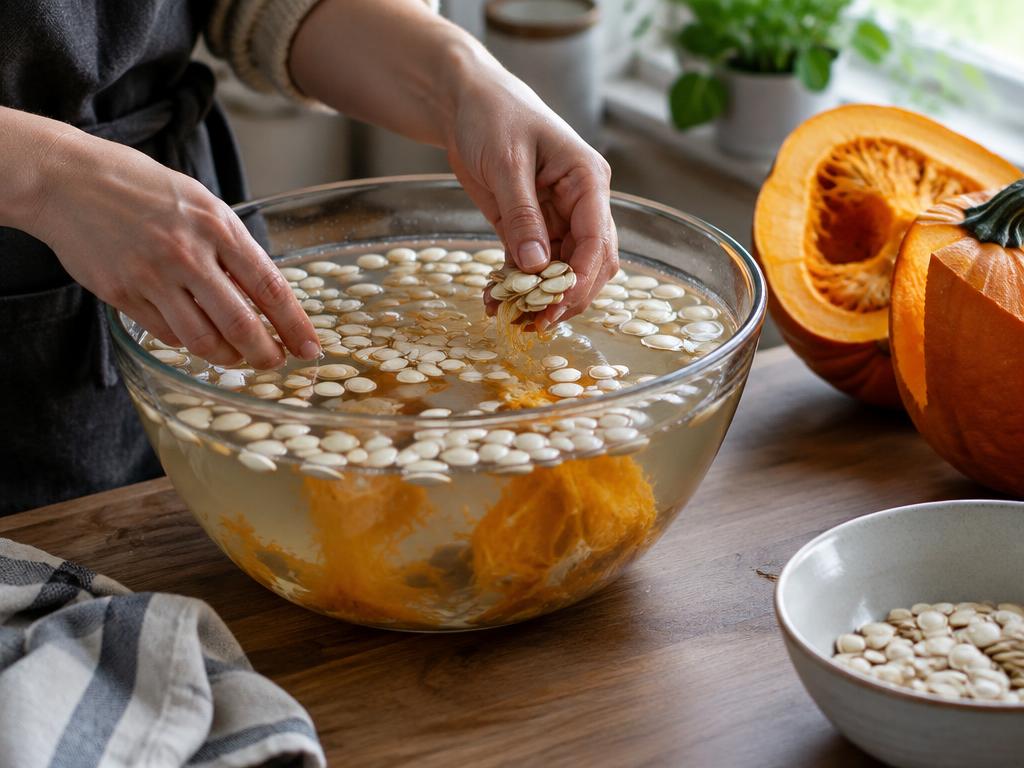
Seeds float, pulp sinks — skim from the top.
The density separation technique
Transfer the entire mass of pulp and seeds directly into a large stainless steel bowl filled with cold tap water. Use your fingers to loosen the clusters beneath the surface. Pumpkin pulp is dense and waterlogged, causing it to sink toward the bottom of the bowl. The seeds contain tiny air pockets between the hull and the germ, which makes them float to the top.
Skim the floating seeds off the surface using a slotted spoon or spider skimmer and transfer them to a colander. Give them a quick rinse under running cold water to clear away residual pumpkin starch, then shake the colander firmly to shed clinging droplets.
The physics of crisp hulls: moisture vaporization at 325°F
The secret to how to roast pumpkin seeds until they snap cleanly between your teeth lies in managing two distinct phases of moisture: surface water and internal bound water.
Phase one: stripping surface moisture
Spread the rinsed seeds across a flat woven cotton kitchen towel or flour sack towel. Fold the fabric over the seeds and press down firmly with your palms. Leave them exposed to open air on your counter for 30 to 45 minutes. If you toss damp seeds in oil, the lipid barrier seals the exterior, trapping steam within the hull and creating a rubbery texture.
Phase two: kernel dehydration versus hull scorching
Carving pumpkin hulls contain high amounts of lignified fiber, while the inner seed contains delicate unsaturated fats. Roasting at 400°F (200°C) flash-heats the exterior, scorching the outer hull before the heat can dehydrate the moist germ inside. A moderate temperature of 325°F (165°C) allows internal water vapor to escape steadily over 20 to 25 minutes, producing an even, brittle crunch without bitter notes.
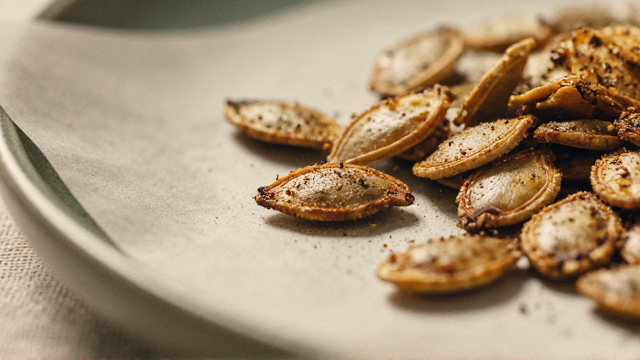
A steady 325°F roast yields a brittle snap throughout the fibrous hull.
Oil applied to a damp seed traps surface water, effectively parboiling the hull before it can brown.
Savory plant-based seasoning profiles
While sea salt and extra-virgin olive oil provide a dependable foundation, dry seed hulls take on complex savory seasonings exceptionally well. Because the hull surface is mildly porous once dried, dry seasonings toast in the oil as the seeds roast.
Nutritional yeast and smoked sea salt: Two tablespoons of nutritional yeast paired with half a teaspoon of smoked paprika deliver a sharp, savory depth reminiscent of aged cheese without dairy.
Tamari and cracked black pepper: Whisk half a teaspoon of gluten-free tamari directly into the olive oil before coating the seeds. The amino acids caramelize at 325°F to form an umami-rich crust.
Toasted cumin and chipotle: Blend ground cumin with mild chipotle powder for an earthy warmth that balances the natural richness of the seed kernel.
Herbes de Provence and garlic: Dried rosemary, thyme, and granulated garlic create an aromatic profile suited for scattering over harvest vegetable soups.
Storage mechanics and maintaining crunch
Warm seeds release residual moisture as they cool. If you transfer them to a container while even slightly warm, condensation forms on the lid and softens the brittle hull.
Cool completely on the sheet pan: Let the seeds rest on the baking tray undisturbed for at least 30 minutes. They continue to firm up as the fats stabilize at room temperature.
Store in airtight glass: Transfer cooled seeds to clean glass jars with a tight seal. In a cool, dry pantry, they maintain full crunch for three weeks.
Re-crisping stale seeds: If room humidity softens your seeds, spread them across a baking sheet and warm at 300°F (150°C) for five minutes to draw out ambient moisture.
High-protein plant pairings for roasted seeds
Whole roasted pumpkin seeds, shell on, give about 3 to 4 grams of plant protein per quarter cup, plus fiber, zinc and magnesium. Shelled pepitas have more, about 8.5 grams per ounce. Their nutty crunch makes them a versatile texture element across plant-based cooking.
Warm lentil and squash salads: Scatter roasted seeds over French green lentils tossed with roasted delicata squash and a sharp mustard vinaigrette.
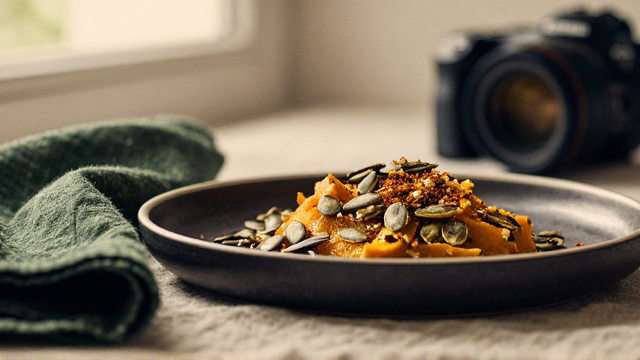
Pureed root vegetable soups: Silky butternut squash or roasted parsnip soup gains necessary texture from a generous spoonful of spiced seeds over the surface.
High-protein grain bowls: Fold seeds into warm quinoa and massaged lacinato kale, finishing with a creamy tahini-lemon dressing.
Crispy Oven-Roasted Pumpkin Seeds
The finished dish
Prep15 minutesCook25 minutesServes4 servings (approx. 1/4 cup each)
Ingredients
1 cup raw pumpkin seeds (rinsed and completely dried)
1 tbsp extra-virgin olive oil
1/2 tsp fine sea salt
1 tbsp nutritional yeast
1/2 tsp smoked sweet paprika
1/4 tsp garlic powder
1/4 tsp freshly ground black pepper
Method
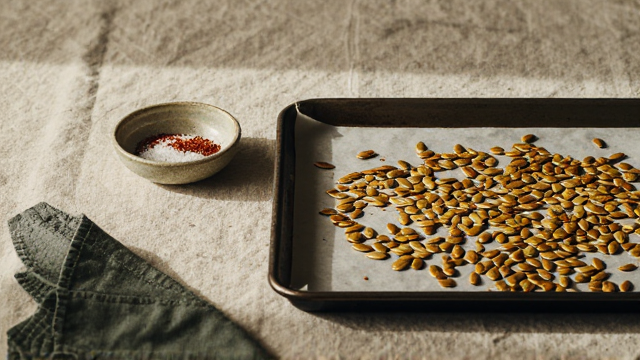
Preheat the oven to 325°F (165°C) and line a rimmed baking sheet with unbleached parchment paper.
Place pulp and seeds into a large bowl of cold water. Swirl gently so pulp sinks; skim floating seeds from the surface and drain thoroughly in a colander.
Spread seeds over a clean cotton kitchen towel. Pat dry firmly and leave on the counter for 30 minutes to evaporate surface moisture.
Transfer dried seeds to a mixing bowl. Drizzle with extra-virgin olive oil and toss until evenly coated.
Sprinkle sea salt, nutritional yeast, smoked paprika, garlic powder, and black pepper over the seeds. Toss thoroughly to distribute seasonings.
Spread seeds onto the prepared baking sheet in a single layer with space between them so air circulates freely.
Bake at 325°F (165°C) for 20 to 25 minutes, stirring once at the 12-minute mark, until golden and crisp.
Remove from the oven and let seeds cool entirely on the baking sheet for 30 minutes before serving or storing.
Nutrition (per serving)
Calories105
Protein3.5g
Fat6.5g
Carbohydrates9g
Fiber3g
Magnesium40mg
Cook's notes
Listen for a soft popping sound around the 18-minute mark in the oven; this indicates internal water has turned to steam and seeds are nearing peak crunch.
For a sweet autumn variation, swap the garlic and paprika for ground cinnamon, ground ginger, and one teaspoon of pure maple syrup.
Check seeds closely during the final five minutes of baking, as their high oil content means they transition quickly from toasted to burnt.
Frequently asked questions
Do you need to boil pumpkin seeds before roasting them?
No, boiling is unnecessary and often counterproductive. Boiling forces excess moisture into the fibrous hull, prolonging the drying process. As long as you dry the raw seeds thoroughly on a flat cloth towel before roasting at 325°F, the hulls will crisp evenly without a water bath.
Why are my roasted pumpkin seeds chewy instead of crunchy?
Chewiness is almost always caused by trapped surface water. If raw seeds are tossed in oil while their hulls are still damp, or if your oven heat is set too high, the exterior cooks before internal moisture can escape. Allow the seeds to dry fully on a towel and roast at 325°F to ensure crispness throughout.
Can you eat the white shell on carving pumpkin seeds?
Yes, whole roasted pumpkin seeds with the white shell intact are entirely edible and provide significant dietary fiber. When roasted slowly at a moderate temperature, the shell turns brittle and delicate rather than tough, creating an enjoyable crunch.
What is the difference between pumpkin seeds and pepitas?
Pepitas are hull-less seeds that grow naturally inside specific oilseed or Styrian pumpkins, recognized by their dark green color and thin skin. The white seeds inside standard carving pumpkins have a thick fibrous outer shell that requires careful drying and roasting to become crisp.
How long do roasted pumpkin seeds stay fresh?
Stored in an airtight glass container at room temperature away from direct sunlight, properly dried and roasted pumpkin seeds remain crisp for two to three weeks. Be sure they have cooled completely to room temperature before sealing the jar to prevent condensation.
Final thoughts
Roasting fresh pumpkin seeds turns an autumn carving byproduct into a crunchy, mineral-rich snack. Once you separate the seeds with the cold-water float method and give the hulls enough drying time on a clean towel, the oven finishes the work in under half an hour. Keep a jar in your pantry to add texture to soups, grain bowls and salads.